
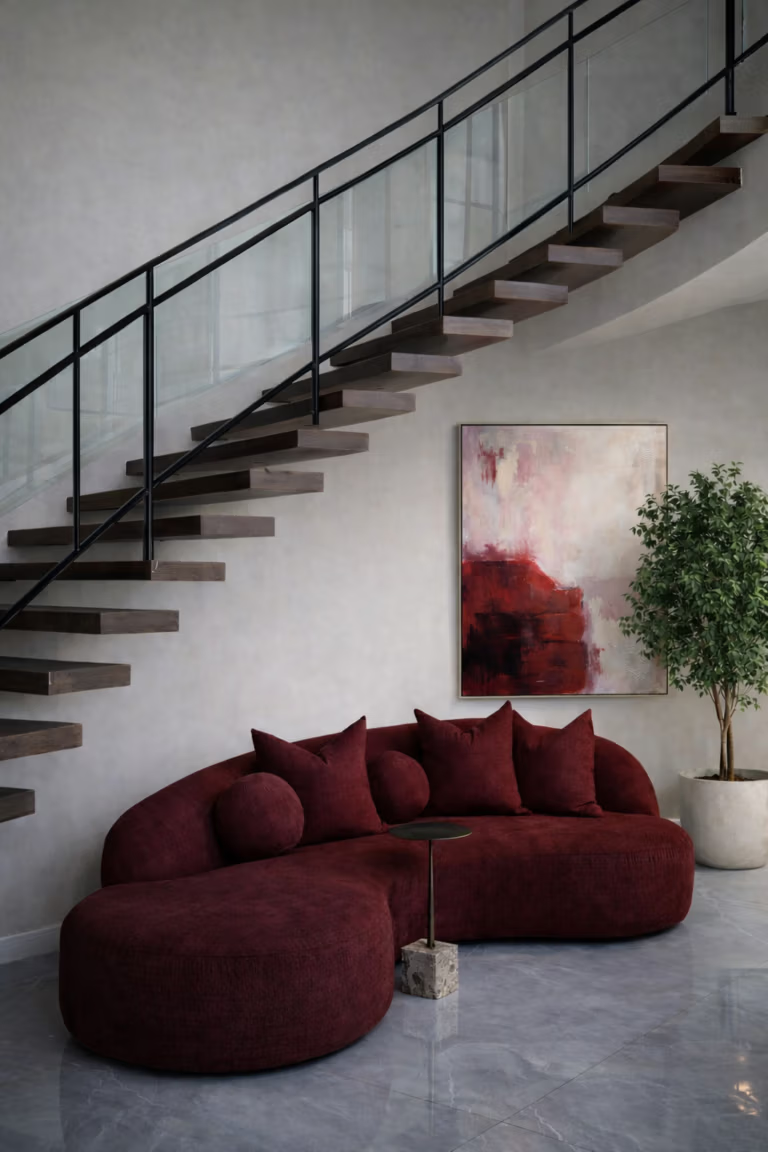
The Interior Design Secret Nobody Talks About…
But Every Room Needs
Ever walked into a room and thought, “Hmm… something feels off,” but couldn’t put your finger on it? Before you blame the sofa fabric or that weird brass lamp you impulse-bought, you might be dealing with a classic design gremlin: visual weight. It’s one of those invisible forces that makes a space feel right… or just plain awkward.
What Is Visual Weight?
Visual weight isn’t about how heavy a piece of furniture actually is — it’s about how heavy it looks to your eye. Some pieces sit in a room and say “I own this space,” while others whisper, “I’m here if you need me.” A bulky, upholstered armchair feels heavier than a slim metal-framed chair even if they weigh the same in pounds.
Think of it like gravity for your eyeballs — heavier pieces pull focus, and lighter pieces let the eye breathe.
Why Designers Obsess Over This (and You Should Too)
When visual weight is balanced, rooms feel calm, cohesive, and intentional. When it’s off, a space feels either too cluttered or strangely empty — like it’s wearing socks with sandals. Balance affects not just how the room looks but how people move in it. A room that feels grounded invites you to stay; a room that feels off throws you off.
A Quick Cheat Sheet on Visual Weight Factors
Visual weight is influenced by:
Size & Scale – Bigger = heavier
Shape – Boxy forms weigh more than airy silhouettes
Color – Dark hues feel weightier than light ones
Texture – Dense, tactile materials feel heavier than smooth or reflective ones
Placement – Items at eye level or lower feel heavier than those floating up high
So yes, that huge dark sofa paired with a tiny glass coffee table isn’t just a mismatch — it’s a visual weight imbalance headache waiting to happen.
How to Balance Visual Weight Without a Design Degree
Here are simple, practical ways to make any space feel balanced:
1. Start With the Heavy Anchors
Your sofa, dining table, bed — these are your visual weight MVPs. Place them intentionally so they anchor the room rather than dominate it.
Pro tip: A chunky sofa deserves visibility from multiple angles — hiding it tucked into a corner wins no design awards.
2. Counterbalance With Lighter Pieces
Pair heavy furniture with lighter accents — open-legged chairs, slim console tables, or glass surfaces that feel airy. These act like visual breathing room.
3. Use Color Smartly
Dark tones add visual heft while light tones lift. If your rug is deep chocolate brown, a lighter coffee table or textiles will help distribute the weight and keep the space from feeling bottom-heavy.
4. Try the “Squint Test”
Designer hack: squint at the room from across the space. If everything looks like one big blob or if one side feels dramatically heavier, your visual weight isn’t balanced. Adjust and repeat.
5. Don’t Forget Negative Space
Empty space isn’t a lack — it’s a tool. Leaving breathing room around heavy elements gives them context and makes the room feel intentional. Too much stuff = visual chaos.
Balance Isn’t Symmetry — It’s Smart Juxtaposition
You don’t need everything to match perfectly. In fact, asymmetrical balance often feels more dynamic and natural than strict symmetry. Pair a large sofa on one side with a grouping of lighter chairs or a sculptural floor lamp on the other. The goal is harmony, not mirror-image perfection.
Why This Matters (Beyond Looks)
At the end of the day, interior design isn’t just decoration — it’s how a space feels. When visual weight is aligned, rooms feel easier to live in, more calming, and surprisingly righter than a dozen mood boards could ever make them.
So next time you’re rearranging furniture or picking new pieces, think less about “matching” and more about balancing. Your living room will thank you — and so will your guests.